
BlitzWaits custom module available for Inspector V2
We have been working on a new custom module for Inspector V2, in fact this module is part of a new project where we will be producing two other...
2020-01-22
23 reads
We have been working on a new custom module for Inspector V2, in fact this module is part of a new project where we will be producing two other...
2020-01-22
23 reads
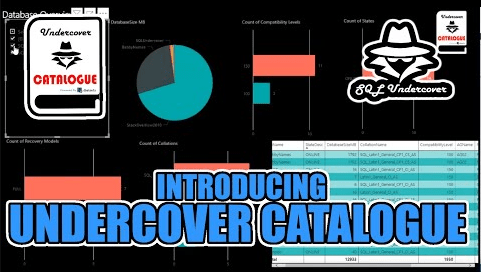
In this video, David give a quick introduction into the Undercover Catalogue.
2020-01-20
40 reads

As always, the scripts in this post can also be found on our Git Hub repo, https://github.com/SQLUndercover/UndercoverToolbox/blob/master/CatagoryControlledAgentJobs.sql Agent jobs, they can be a right pain to manage when you’re...
2020-01-16
41 reads

We’re pleased to announce the release of the Undercover Catalogue 0.4.0, (please see HERE for full details of the Catalogue). The new version brings with it a number of...
2020-01-06
28 reads
If you need to keep track of CPU and are not fortunate enough to have a monitoring tool to keep hold of historical CPU usage then this module may...
2020-01-02
31 reads

With the New Year fast approaching and maybe already having arrived depending on where you are, we thought we’d do a quick recap of our top 5 posts from...
2019-12-31
31 reads

2019-12-24
20 reads
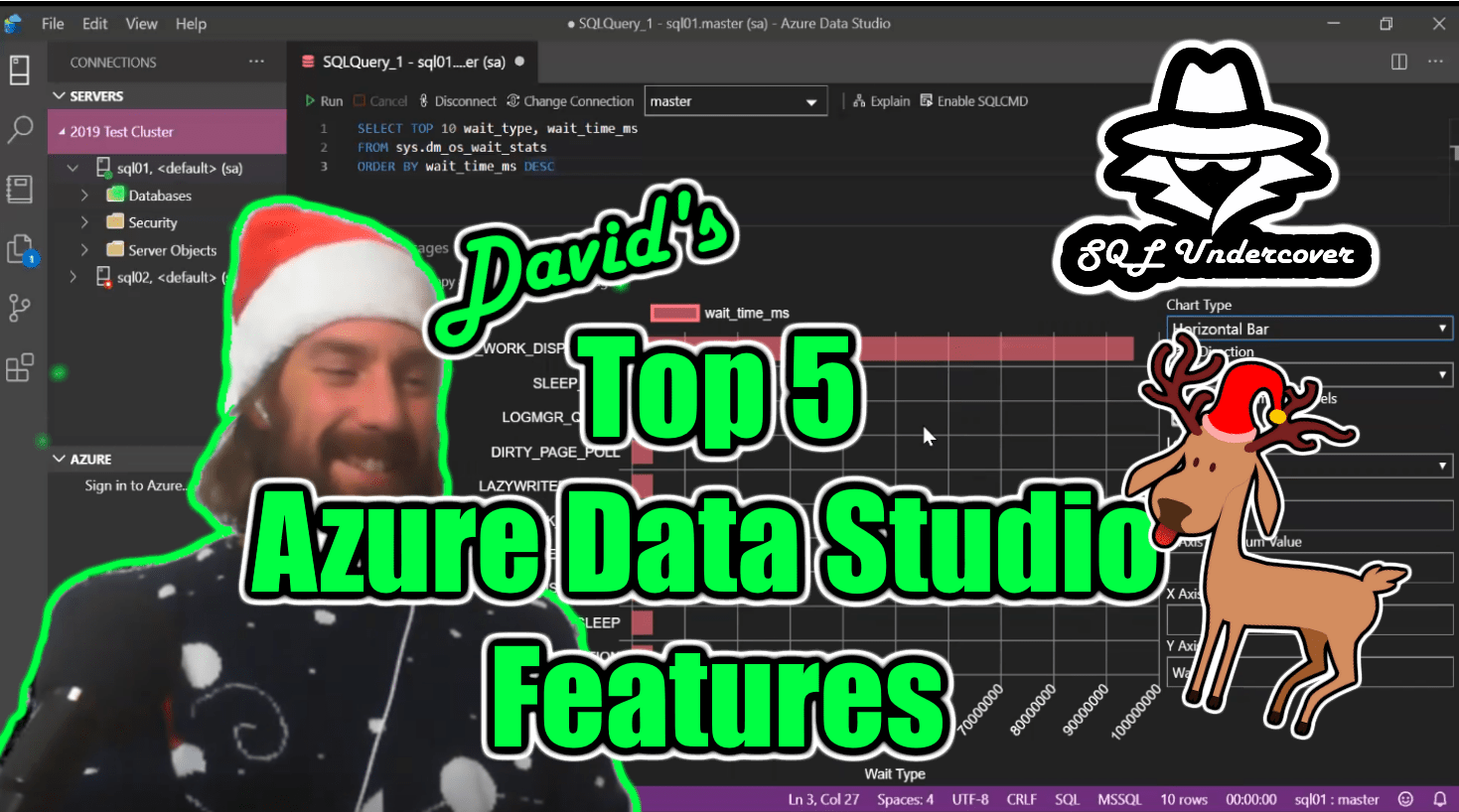
In our Christmas Special, David picks his top 5 features of Azure Data Studio.
2019-12-17
33 reads

The SQL Installation file can be found here.The new Powershell installer can be found here.If you are running the powershell collection you will need to grab the latest revision.The...
2019-12-03
46 reads

Memory grants, now here’s a fun thing that can pretty much take your SQL Server to its knees. The Symptoms The first thing that you’re going to notice is...
2019-12-03
301 reads
By Vinay Thakur
Continuing from Day 3 where we covered LLM models open/closed and their parameters, Today...
By Steve Jones
One of the nice things about Flyway Desktop is that it helps you manage...
By HeyMo0sh
Microsoft Fabric (not to be confused with the more general term “fabric” in DevOps)...
I'm fairly certain I know the answer to this from digging into it yesterday,...
Hi Team, I am trying to refresh the Azure Synapse Dedicated pool from production...
hi everyone I am not sure how to write the query that will produce...
I have some data in a table:
CREATE TABLE #test_data
(
    id INT PRIMARY KEY,
    name VARCHAR(100),
    birth_date DATE
);

-- Step 2: Insert rows
INSERT INTO #test_data
VALUES
(1, 'Olivia', '2025-01-05'),
(2, 'Emma', '2025-03-02'),
(3, 'Liam', '2025-11-15'),
(4, 'Noah', '2025-12-22');
If I run this query, how many rows are returned?
SELECT *
FROM OPENJSON(
     (
         SELECT t.* FROM #test_data AS t FOR JSON PATH
     )
             ) t;
See possible answers